8 Things to Consider When Choosing a Healthcare Clinic
Choosing a healthcare clinic can feel difficult, especially when several providers offer similar services.
A clinic may look professional online, but appearance alone does not show whether it is suitable for your needs. Qualifications, communication, accessibility, fees and the way care is organised can all influence the experience.
The right clinic is not necessarily the largest, closest or most heavily advertised. It should provide clear information, appropriate professional support and a service that feels suitable for your circumstances.
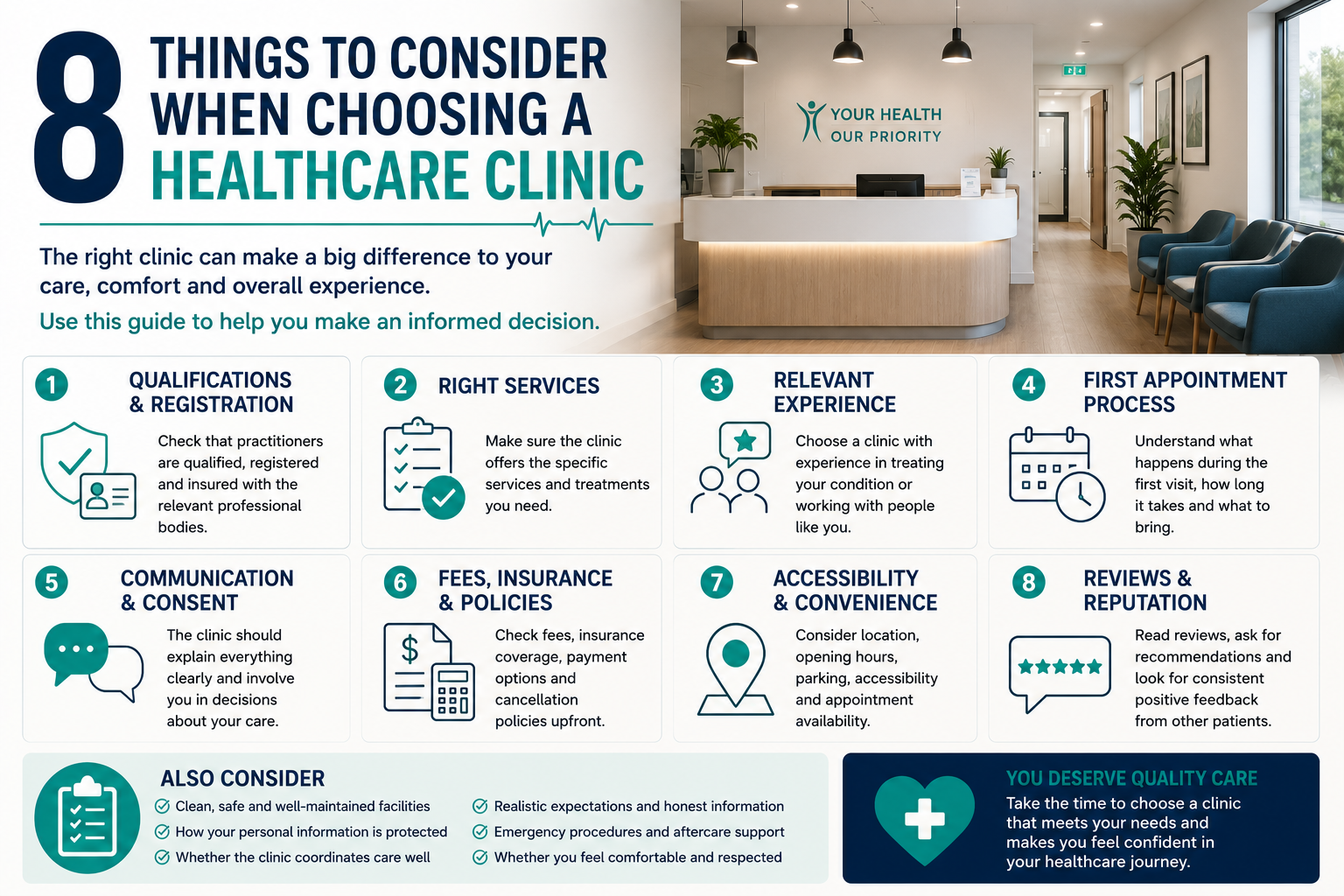
Here are eight practical things to consider before choosing a healthcare clinic.
1. Practitioner Qualifications and Registration
Start by checking who will provide the service and whether that person holds the relevant qualifications.
Depending on the profession and location, practitioners may need to be:
- Registered with a regulatory body
- Licensed to practise
- Insured
- Properly trained
- Working within a defined professional scope
A clinic website should ideally explain:
- Practitioner names
- Professional titles
- Qualifications
- Areas of practice
- Registration details
- Professional memberships
Registration requirements vary between professions and countries.
Some healthcare titles are legally protected, while others may not be. Patients should therefore confirm credentials directly with the appropriate regulator where necessary.
Qualifications do not guarantee that a practitioner will be the right fit, but they are an essential starting point.
2. Whether the Clinic Offers the Right Service
Healthcare clinics may offer one specialist service or several different services under one roof.
Before booking, make sure the clinic actually provides the type of assessment or treatment you are seeking.
Services may include:
- Physiotherapy
- Chiropractic care
- Massage therapy
- Acupuncture
- Rehabilitation
- Counselling
- Podiatry
- Dietetic support
- Occupational therapy
- Other regulated or allied health services
The clinic should explain what each service involves and who may provide it.
Avoid assuming that two similarly named services are the same.
For example, the approach, regulation and scope of practice may differ between professions. A clear clinic website should help patients understand these distinctions.
3. Experience Relevant to Your Needs
General experience is useful, but relevant experience may be more important.
A practitioner may work mainly with:
- Sports injuries
- Post-operative rehabilitation
- Persistent pain
- Workplace injuries
- Older adults
- Children
- Neurological conditions
- Pregnancy-related concerns
- General mobility
- Specific occupational demands
Ask whether the practitioner regularly works with people who have needs similar to yours.
This does not mean that the clinic should promise a particular result. It simply helps determine whether the practitioner is familiar with the type of problem, recovery process or practical concern involved.
For complex or serious symptoms, it may be necessary to speak with a GP, specialist physician or another appropriately qualified professional first.
4. How the First Appointment Works
A clinic should provide clear information about what to expect during the first appointment.
This may include:
- How long it lasts
- What information to bring
- Whether forms must be completed
- What clothing may be suitable
- Whether an assessment is included
- Whether treatment may begin immediately
- Whether a referral is needed
- Whether medical records are required
A first appointment may involve discussion, physical assessment, review of relevant history and planning of possible next steps.
Patients should feel able to ask questions and explain their concerns.
A clinic should not pressure someone into agreeing to a long treatment plan before providing a reasonable explanation of what is being recommended.
5. Communication and Informed Consent
Good communication is an important part of healthcare.
Practitioners should explain:
- What they are assessing
- What they have observed
- What options may be available
- What a proposed treatment involves
- Possible benefits and limitations
- Relevant risks
- Alternative options
- Expected costs
Patients should have an opportunity to ask questions before agreeing to care.
Consent should be informed and voluntary.
A patient should also feel able to:
- Decline a particular treatment
- Ask for clarification
- Request a pause
- Seek another opinion
- Stop treatment
- Discuss comfort or privacy concerns
A clinic that communicates clearly can help patients feel more confident and involved in decisions.
6. Fees, Insurance and Cancellation Policies
Healthcare costs should be explained as clearly as possible.
Before booking, check:
- The appointment fee
- Whether the first visit costs more
- Whether treatment is included
- Whether payment is required in advance
- Accepted payment methods
- Insurance or benefit coverage
- Direct billing options
- Cancellation fees
- Late-arrival policies
- Charges for reports or forms
Insurance coverage varies widely.
Even when a service is eligible, the exact amount covered may depend on the patient’s individual plan.
It is sensible to confirm coverage directly with the insurer rather than relying entirely on the clinic.
Transparent pricing helps patients avoid unexpected costs.
7. Accessibility and Practical Convenience
A clinic may offer excellent care but still be difficult to use if practical access is poor.
Consider:
- Location
- Public transport
- Parking
- Step-free access
- Lift access
- Accessible toilets
- Opening hours
- Evening appointments
- Weekend availability
- Online booking
- Telephone support
Patients with mobility, sensory or communication needs may wish to ask about specific accommodations before attending.
Other practical questions may include:
- Is there somewhere to wait comfortably?
- Can a support person attend?
- Are interpreters available?
- Is virtual care offered where appropriate?
- Are reminder messages provided?
Convenience should not be the only deciding factor, but it can make ongoing attendance more manageable.
8. Reviews, Recommendations and Reputation
Reviews can provide insight into the patient experience.
They may mention:
- Communication
- Professionalism
- Cleanliness
- Appointment organisation
- Staff helpfulness
- Waiting times
- Overall experience
However, reviews should be interpreted carefully.
Healthcare outcomes vary, and one person’s experience may not predict another’s.
Be cautious with reviews that focus on guaranteed cures, dramatic claims or pressure to purchase large treatment packages.
Recommendations from trusted healthcare professionals, family members or friends may also be useful, but the clinic still needs to suit your own needs.
A balanced decision should consider qualifications, services, communication and practical access alongside reputation.
Additional Factors to Consider
Several other details may influence the choice of clinic.
Privacy and Confidentiality
The clinic should handle personal and health information appropriately.
Patients may wish to ask:
- How records are stored
- Who can access them
- How information is shared
- Whether consent is required
- How online forms are protected
- How long records are retained
Sensitive information should not be requested or shared without a legitimate reason.
Cleanliness and Safety
The clinic environment should appear clean, organised and appropriate for the services provided.
Safety procedures may include:
- Cleaning treatment areas
- Hand hygiene
- Equipment maintenance
- Infection-control measures
- Safe disposal practices
- Emergency procedures
Patients should feel comfortable raising concerns.
Coordination Between Practitioners
Some clinics offer several healthcare disciplines.
This can make referrals and communication easier, but patients should understand how information is shared.
Ask:
- Will practitioners communicate with one another?
- Is consent required?
- Who coordinates the plan?
- Will external professionals receive updates?
- Are services billed separately?
Multidisciplinary care can be useful when it is organised clearly and appropriately.
Whether the Clinic Makes Realistic Claims
Healthcare websites should avoid promising guaranteed outcomes.
Be cautious of claims such as:
- Guaranteed recovery
- Permanent cure
- Immediate results
- Treatment suitable for everyone
- No risks
- Better than all alternatives
Responsible clinics usually explain that results vary and that recommendations depend on assessment.
They should also be willing to refer a patient elsewhere when a concern falls outside their scope.
Questions to Ask Before Booking
Useful questions may include:
- Which practitioner would I see?
- What qualifications and registration do they hold?
- Do they regularly work with this type of concern?
- What happens during the first appointment?
- How long is each appointment?
- What are the fees?
- What is the cancellation policy?
- Is insurance direct billing available?
- Is the clinic accessible?
- What should I bring?
- Can I ask questions before agreeing to treatment?
- Will I be referred elsewhere if needed?
A clinic should be able to answer reasonable practical questions clearly.
Warning Signs
Potential warning signs may include:
- Unclear practitioner credentials
- Guaranteed outcomes
- Pressure to prepay for a large package
- No explanation of risks or alternatives
- Refusal to answer questions
- Unclear fees
- Inadequate privacy
- Treatment outside the practitioner’s apparent scope
- Discouraging patients from speaking with other professionals
- Misleading professional titles
One concern may have an innocent explanation, but several should encourage caution.
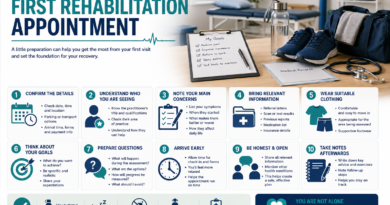
Preparing for the First Appointment
Once a clinic has been selected, preparation can help make the appointment more useful.
Consider bringing:
- A list of current symptoms
- Relevant dates
- Medication information
- Previous reports
- Imaging results
- Insurance details
- Questions
- Suitable clothing
- Referral documents, where required
Be honest about symptoms, previous treatment and any concerns.
Healthcare decisions are easier when the practitioner has accurate information.
Final Thoughts
Choosing a healthcare clinic involves more than finding the nearest provider.
Practitioner qualifications, relevant experience, clear communication, transparent fees, accessibility and realistic claims all matter.
Patients should feel informed, respected and able to ask questions before agreeing to care.
Online information and reviews can support the decision, but they should not replace professional advice or direct verification of important details.
For urgent, severe or unexplained symptoms, contact an appropriate medical professional or emergency service rather than relying on general online guidance.