How Independent Arts Organisations Support Creative Communities
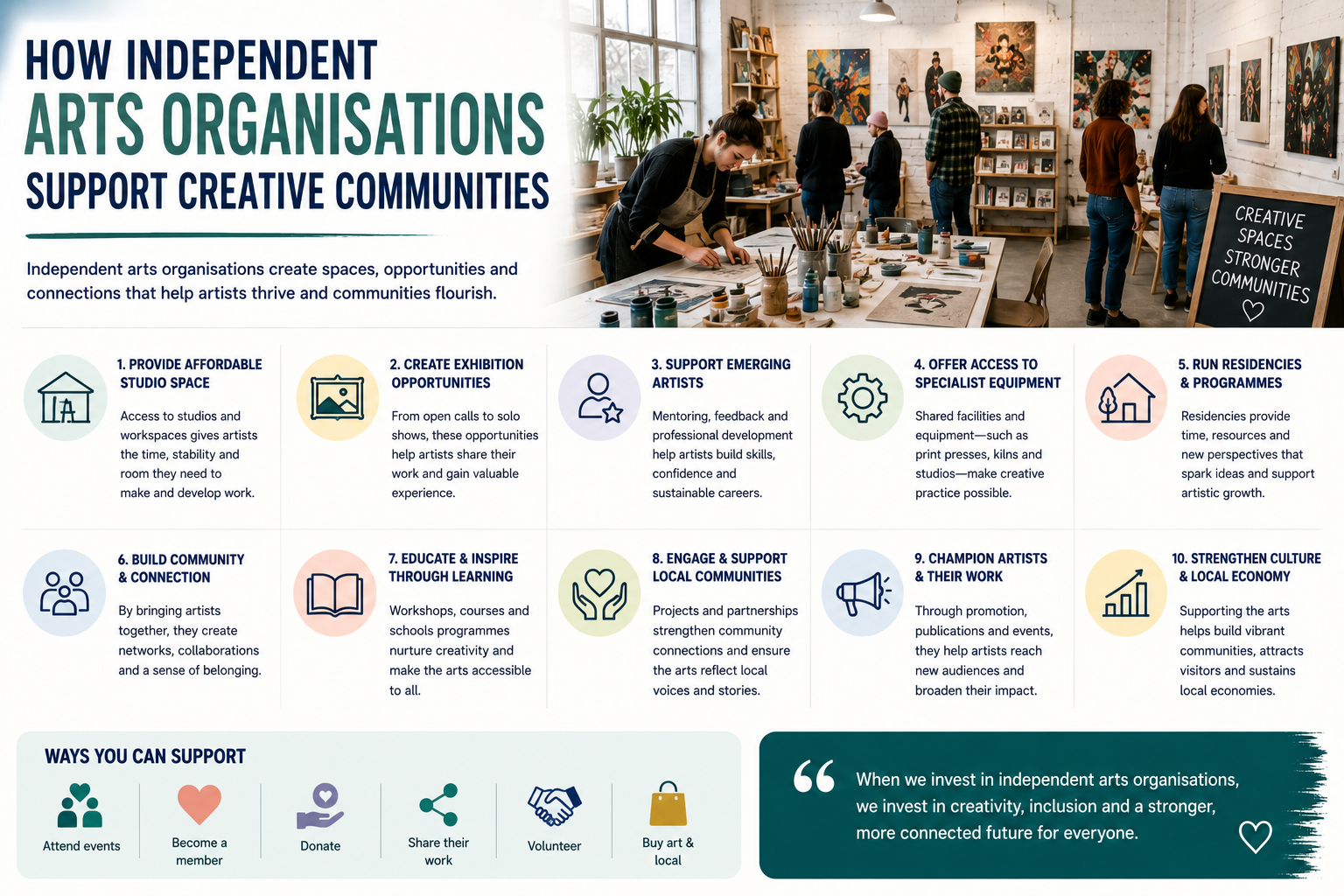
Independent arts organisations play an important role in helping artists develop, connect with audiences and continue making work.
They may operate as charities, artist-led groups, studio providers, community organisations, galleries, print workshops, residency programmes or small cultural venues. Many work with limited resources, yet provide opportunities that would otherwise be difficult for artists and local communities to access.
Their value is not always measured through ticket sales or large exhibitions. It may be seen in affordable studio space, mentoring, shared equipment, public workshops, local partnerships and the long-term support of creative careers.
Here are some of the main ways independent arts organisations strengthen creative communities.
Providing Affordable Studio Space
One of the most practical forms of support is access to workspace.
Artists often need space to:
- Paint
- Sculpt
- Photograph work
- Store materials
- Test installations
- Meet collaborators
- Prepare exhibitions
Commercial rents can make suitable studios difficult to afford, particularly for early-career artists.
Independent organisations may provide:
- Individual studios
- Shared workspaces
- Temporary project rooms
- Flexible memberships
- Short-term residencies
- Subsidised rent
Affordable studios can give artists greater stability and allow them to develop work over a longer period.
Creating Opportunities to Exhibit
Many artists struggle to find suitable places to show their work.
Independent organisations may organise:
- Solo exhibitions
- Group exhibitions
- Open studios
- Graduate showcases
- Community exhibitions
- Pop-up events
- Online presentations
- Touring projects
These opportunities can help artists gain experience in:
- Selecting work
- Preparing labels
- Installing exhibitions
- Writing statements
- Speaking with visitors
- Promoting events
- Documenting their practice
Exhibitions also give audiences a chance to encounter work that may not appear in larger commercial or public institutions.
Supporting Emerging Artists
Artists at an early stage often need more than visibility.
They may require guidance on:
- Applications
- Pricing
- Portfolios
- Artist statements
- Documentation
- Funding
- Exhibitions
- Professional communication
Independent organisations may provide:
- Mentoring
- Peer support
- Critiques
- Workshops
- Networking
- Professional-development sessions
- Introductions to curators
This practical support can help artists build confidence and make more informed career decisions.
Offering Specialist Equipment
Some creative practices require expensive or unusual equipment.
Independent workshops may provide access to:
- Printing presses
- Ceramics kilns
- Photography facilities
- Digital fabrication tools
- Woodworking equipment
- Textile machinery
- Editing suites
- Specialist ventilation
- Large worktables
Shared access can make these processes affordable.
It can also create opportunities for artists to experiment with unfamiliar materials and techniques.
Running Residencies
Residencies give artists time and space to focus on a project.
They may include:
- Studio access
- Accommodation
- Materials
- Mentoring
- Public presentations
- Research support
- Community engagement
Residencies can help artists step away from normal routines and explore new directions.
Some are focused on production, while others prioritise research, collaboration or engagement with a particular place.
Organising Workshops and Courses
Independent arts organisations often provide practical learning opportunities.
These may cover:
- Drawing
- Painting
- Printmaking
- Photography
- Sculpture
- Ceramics
- Digital media
- Professional development
- Exhibition preparation
Workshops can serve:
- Professional artists
- Beginners
- Young people
- Schools
- Families
- Older adults
- Community groups
They can help new participants develop skills while also generating income for artists who teach.
Connecting Artists With One Another
Creative work can be isolating.
Independent organisations create environments where artists can:
- Share ideas
- Exchange feedback
- Discuss challenges
- Collaborate
- Recommend opportunities
- Share equipment
- Develop joint projects
Informal conversations can be as valuable as formal programmes.
A strong studio or membership community can provide encouragement, accountability and practical help.
Supporting Local Audiences
Independent arts organisations make culture more accessible within local communities.
They may organise:
- Free exhibitions
- Open studios
- Public talks
- Community projects
- Family activities
- School visits
- Local festivals
- Artist demonstrations
These events can introduce people to contemporary art in a more approachable setting.
They can also reduce the need to travel to major cultural centres.
Building Partnerships With Schools
Schools may not always have the resources to provide specialist arts experiences.
Independent organisations can support education through:
- Artist-led workshops
- School residencies
- Teacher resources
- Exhibition visits
- Creative projects
- Equipment access
- Careers talks
Working artists can give students direct insight into how creative practices develop.
These programmes may also support confidence, communication and practical problem-solving.
Supporting Community Projects
Arts organisations often work with communities that may not engage with conventional galleries.
Projects may involve:
- Young people
- Older adults
- Refugees
- Disabled participants
- Care settings
- Local residents
- Community centres
- Health organisations
The strongest programmes are developed with participants rather than imposed on them.
They should respect local knowledge and avoid treating communities simply as material for an artist’s project.
Providing Paid Opportunities
Independent organisations can help artists earn income through:
- Teaching
- Commissions
- Residencies
- Talks
- Project delivery
- Exhibition fees
- Consultancy
- Public art
Paying artists properly recognises the time, expertise and preparation required.
Where budgets are limited, organisations should be transparent about what is and is not paid.
Helping Artists Access Funding
Funding applications can be difficult, particularly for artists unfamiliar with formal processes.
Organisations may help by providing:
- Application workshops
- Budget guidance
- Project planning
- Feedback
- Partnership letters
- Introductions
- Information about deadlines
They may also apply for funding on behalf of wider programmes.
This can create opportunities that individual artists would struggle to develop alone.
Promoting Artists and Their Work
Independent organisations may promote artists through:
- Websites
- Newsletters
- Social media
- Press releases
- Interviews
- Publications
- Exhibition catalogues
- Media partnerships
This can help artists reach new audiences and build a public record of their work.
Promotion should be accurate and should not exaggerate achievements or make unsupported claims.
Publishing Interviews and Features
Editorial content can help audiences understand an artist’s practice.
Organisations may publish:
- Artist interviews
- Studio profiles
- Project diaries
- Exhibition essays
- Process features
- Member spotlights
These articles can remain useful long after an exhibition ends.
They also help document local cultural activity that may otherwise receive little media attention.
Encouraging Experimentation
Commercial settings may prioritise work that is easier to sell.
Independent organisations often provide more space for:
- Unfinished ideas
- New materials
- Collaborative work
- Performance
- Research
- Social practice
- Site-specific projects
Not every experiment produces a successful result, but experimentation is essential to artistic development.
Supporting Artists Through Career Changes
Creative careers are rarely linear.
Artists may experience:
- Career breaks
- Changes in medium
- Relocation
- Financial pressure
- Family responsibilities
- Loss of confidence
- Return to practice later in life
Independent organisations can provide routes back into creative work.
Flexible memberships, short courses, mentoring and peer groups can help artists rebuild momentum.
Preserving Local Cultural Identity
Artists often respond to local history, landscape, architecture and community.
Independent arts organisations can help document and interpret these connections through:
- Exhibitions
- Oral histories
- Archives
- Publications
- Public projects
- Community commissions
This work can preserve stories and perspectives that might otherwise be overlooked.
Contributing to Local Economies
Creative organisations can also contribute economically.
They may support:
- Artists
- Tutors
- Designers
- Technicians
- Fabricators
- Printers
- Photographers
- Local suppliers
- Cafés and nearby businesses
Events can bring visitors into an area and increase activity around local venues.
Economic impact should not be the only measure of cultural value, but it can be an important part of the wider picture.
Reusing Buildings and Spaces
Independent arts organisations often operate from:
- Former factories
- Schools
- Offices
- Farm buildings
- Shops
- Warehouses
- Community halls
Creative use can bring neglected spaces back into activity.
However, organisations may face uncertain leases, rising rents and redevelopment pressure.
Long-term security is important if they are to continue supporting artists and communities.
Creating Volunteer and Trustee Opportunities
Many organisations depend on volunteers, trustees and advisory groups.
These roles can provide experience in:
- Governance
- Fundraising
- Events
- Communications
- Education
- Community engagement
- Finance
- Strategy
Good governance helps organisations remain accountable and sustainable.
Volunteers should also receive appropriate support and should not be used to replace paid roles without consideration.
Improving Access to the Arts
Independent organisations can make creative activity more inclusive by considering:
- Physical accessibility
- Affordable pricing
- Free events
- Clear information
- Accessible toilets
- Transport
- Captioning
- Interpretation
- Flexible participation
- Sensory needs
Accessibility should be planned from the beginning rather than added as an afterthought.
No organisation can meet every need immediately, but clear information and a willingness to improve are important.
Challenges Independent Organisations Face
Independent arts organisations often operate with limited funding and small teams.
Common challenges include:
- Rising rent
- Short-term grants
- Staff burnout
- Volunteer dependence
- Equipment costs
- Building maintenance
- Limited marketing capacity
- Uncertain income
- Growing demand
These pressures can make long-term planning difficult.
Audiences may see a successful exhibition without recognising the amount of administrative and fundraising work behind it.
Why Transparency Matters
Organisations should communicate clearly about:
- Funding
- Selection processes
- Artist payments
- Commercial partnerships
- Governance
- Accessibility
- Complaints
- Safeguarding
Transparency helps build trust among artists, participants, funders and audiences.
How People Can Support Independent Arts Organisations
Support can take many forms.
People can:
- Attend exhibitions
- Join workshops
- Become members
- Donate
- Volunteer
- Share events
- Purchase work
- Subscribe to newsletters
- Recommend programmes
- Hire spaces
- Become trustees
- Support fundraising campaigns
Consistent support is often more valuable than a single burst of attention.
Final Thoughts
Independent arts organisations support creative communities by providing space, equipment, opportunities, education and professional guidance.
They help artists develop practices, connect with audiences and take creative risks that may not be possible elsewhere.
Their work also benefits schools, local residents, community groups and wider cultural networks.
Although many operate on modest budgets, their impact can be substantial. Supporting them helps sustain the conditions in which artists and creative communities can continue to grow.